

AI Integrations
AI that understands your codebase, your documentation, and how your team ships, so it does real work instead of helping a little.
Most teams already have AI. It helps a little.
Your team has the seats: an assistant in the editor, a chat window in the browser. People use them, and the honest verdict is usually that it helps a little.
The reason is almost always the same. The tools are working from general knowledge. They haven't read your codebase, your documentation, or the decisions your team made and moved on from, so nothing they produce can be trusted without checking. Every answer gets verified by hand, and the manual work stays exactly where it was.
Closing that gap isn't a licensing decision. It's an engineering one.

Grounded in your own work
We connect your assistants to the material your team actually works from: your code, your internal documentation, the standards and decisions you've already written down. Questions get answered from your context, with the source attached, so an answer can be checked in seconds instead of taken on trust. The change is immediate: people stop assembling context by hand, and start asking questions they would previously have interrupted a colleague for.
- Answers drawn from your own repositories, documentation, and written decisions
- Every answer traceable back to the source it came from
- New material picked up as your team writes it, without a maintenance ritual
- Onboarding questions answered without pulling a senior engineer off their work
The repetitive work, automated
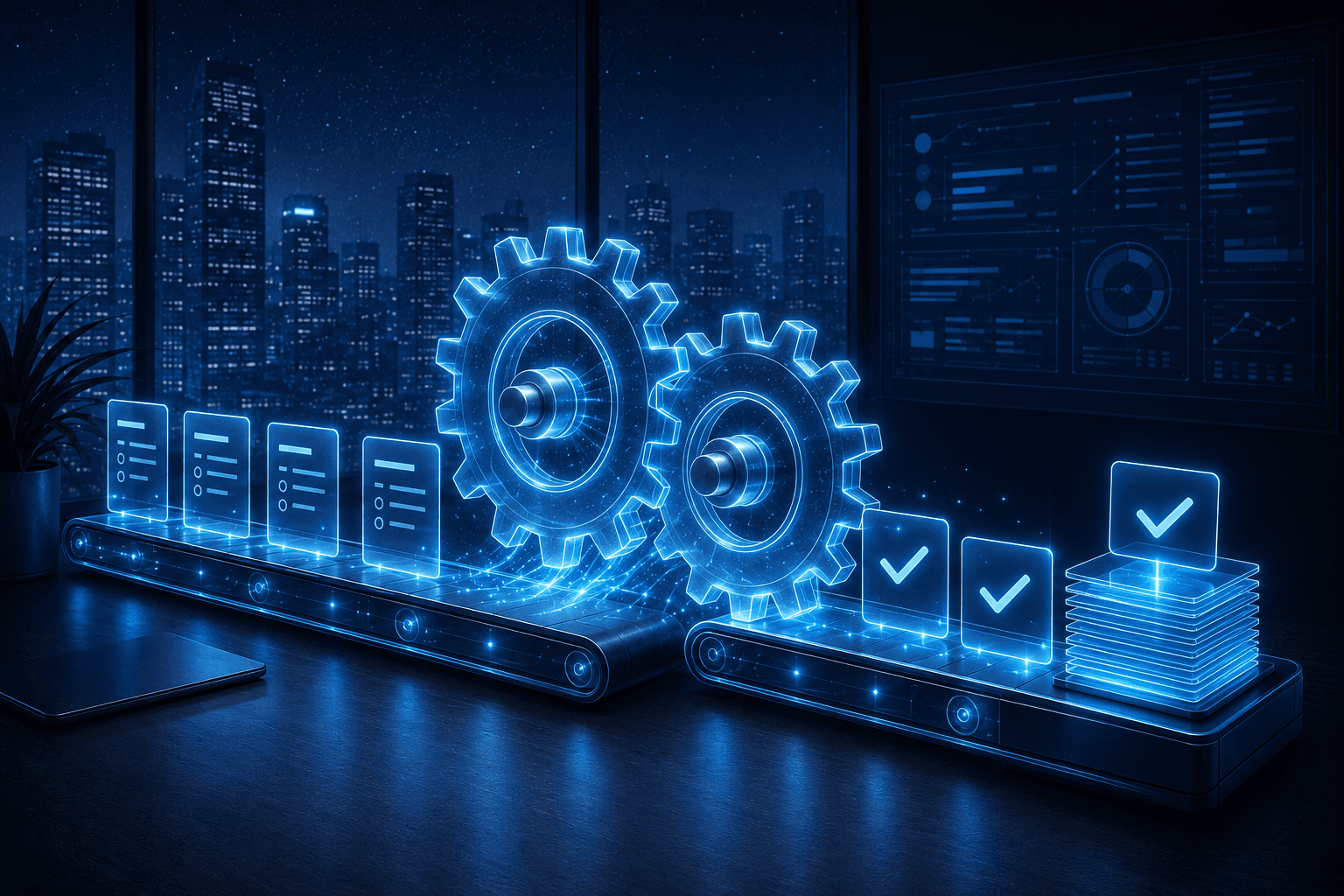
A large share of delivery work is genuinely repetitive: the same shape of change, the same checks, the same write-up, again and again. We identify the parts of your process that follow a reliable pattern and hand them over end to end, so your engineers spend their attention on the decisions that actually need judgement. Not a faster version of the tedious middle of a task: the tedious middle removed.
- Routine changes carried from request through to a reviewable result
- Checks and write-ups produced consistently, not when someone remembers
- Work that arrives ready for review rather than ready to start
- Engineers spending their day on decisions rather than mechanics

A human approval step on anything real
Automation without a stopping point is a liability, and we treat it as one. Everything we set up produces work for a person to review and approve: the same review your team already does, in the place they already do it. Speed comes from removing the manual assembly, never from removing the judgement. If that trade is ever on the table, we take the slower option.
- A person reviews and approves anything that changes real code
- Review happens inside your existing process, not in a separate tool
- Every automated action is visible and attributable after the fact
- Straightforward to pause, reverse, or narrow at any point

Inside your environment
For most teams this is the deciding question, so we answer it first. The setup runs inside your environment and respects the constraints you already work under: your access controls, your data handling rules, your compliance position. We work with that boundary rather than asking you to move it, and we get your security people in the room early rather than presenting them with something finished.
- Runs within your existing infrastructure and access controls
- Your code and documentation stay inside your boundary
- Compatible with the compliance position you already hold
- Reviewed with your security team before anything is switched on

Your team, trained on your work
A setup nobody uses well is a setup that quietly gets abandoned. We train your team on their own repositories and their own tasks, so what they learn applies the same afternoon. The goal is a team that can extend and maintain this without us. We would rather leave that behind than a dependency on us.
- Training on your actual projects, not generic demonstrations
- Patterns your team can apply the same day
- Documentation your team owns and can keep current
- Built so your team can extend it after we step back
The difference shows up as time.
Not a productivity score. The hours your team gets back, and where they go instead.
Work measured in hours, not days
Tasks that used to take an afternoon of assembly and checking compress into a single focused sitting.
Less waiting on the one person who knows
Questions that used to require interrupting a senior engineer get answered directly, with the source attached.
The boring parts stop needing a person
Predictable, repetitive work runs on its own and arrives ready for someone to approve.
New people productive sooner
Someone joining can ask your codebase questions directly instead of building that context over weeks.
Quality that holds under speed
The checks and the approval step stay where they are, so moving faster doesn't mean carrying more risk.
A team that owns it
Your engineers understand the setup well enough to extend it, change it, and keep it current themselves.
Discovery, one team, then wider.
Discovery
We look at how your team actually ships: where the time goes, which work is genuinely repetitive, and what your constraints really are. You get an honest read on what is worth automating and, just as usefully, what is not.
Pilot on one team
We set it up for a single team against a real workload, not a demonstration. Small enough to move quickly, real enough that the result tells you something you can act on.
Rollout
Once the pilot has earned it, we extend across teams and hand over ownership: your people trained, the documentation in their hands, and a clear picture of what it costs to run.
Let's build something that lasts.
Tell us about your product and we'll be straightforward about what it takes.